
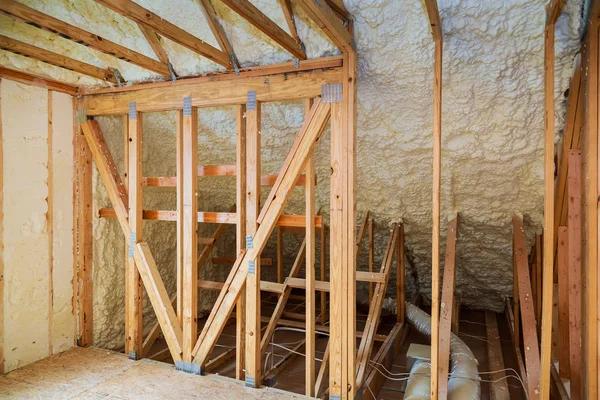
Improving the efficiency of a property is a priority for many homeowners and building managers, and one of the most effective ways to achieve this is through the use of spray foam insulation. Spray foam has become increasingly popular due to its superior ability to seal gaps, reduce air leakage, and provide excellent thermal resistance compared to traditional insulation materials. When applied correctly, it can significantly enhance a property’s energy performance while also contributing to greater comfort inside the building.
Spray foam insulation works by expanding upon application, filling cracks, crevices, and hard-to-reach areas that conventional insulation often misses. This expansion creates an airtight barrier that prevents warm or cool air from escaping or entering unwanted spaces. As a result, heating and cooling systems do not have to work as hard to maintain consistent indoor temperatures. This reduction in strain on HVAC units can lead to lower energy bills and extend the lifespan of mechanical equipment.
Another advantage of spray foam is its moisture-resistant properties. Unlike fiberglass or cellulose insulation that may absorb water over time leading to mold growth or structural damage, closed-cell spray foam acts as both an insulator and a moisture barrier. It helps prevent condensation within walls and ceilings by reducing humidity infiltration from outside sources. This characteristic not only protects the building’s integrity but also promotes healthier indoor air quality.
The installation process involves professional contractors who apply two chemical components mixed at high pressure directly onto surfaces such as walls, roofs, attics, basements, or crawl spaces. The material quickly expands into a dense foam that adheres tightly to substrates like wood, metal framing, concrete blocks, or drywall panels. Proper preparation before application ensures optimal adhesion and coverage for maximum effectiveness.
Beyond energy savings and moisture control benefits are improvements in soundproofing capabilities provided by spray foam insulation. The dense structure absorbs noise vibrations more efficiently than standard materials which can be particularly valuable in urban environments where external sounds disrupt daily activities.
In addition to residential uses, commercial buildings benefit greatly from spray foam’s versatility because it adapts well across various climates and construction types without compromising durability over time. Investing in this technology supports sustainability goals by reducing carbon footprints associated with excessive energy consumption.
Ultimately creating a more efficient property insulate your propert with spray foam results in enhanced occupant comfort combined with cost-effective long-term savings on utilities while preserving structural health through improved environmental protection measures integrated into modern building practices today.